Meet Cem Demirci, MD
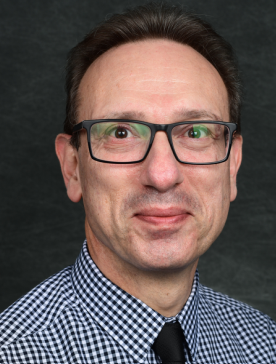
- Endowed Position:
- Chase Family Chair in Juvenile Diabetes
What does it mean to you to hold this position?
Holding the Chase Endowed Chair in Juvenile Diabetes is both an honor and a responsibility, one that grounds my work in purpose and possibility every day. To me, this position is more than a title; it’s a commitment to the children and families we serve, and a pledge to elevate every aspect of care, education, and advocacy for those living with Type 1 diabetes.
It means having the platform (and the trust) to drive innovation in how we support the whole child, beyond just managing blood sugars. It means mentoring students and trainees, not just in clinical knowledge, but in empathy, ethics, and the human side of medicine. It means building bridges between academic medicine, community partners, and families, to ensure that no child with diabetes ever feels alone.
The endowment has enabled me to dream bigger, act faster, and advocate louder for my patients, for health equity, and for a future where every child with diabetes has the tools, support, and confidence to thrive. I carry that mission with deep gratitude and unwavering commitment every day.
What exciting projects have your students worked on this year, and how has your position played a positive role in their outcomes?
Gate‑opener to patient populations
As clinical director, I can embed recruitment in routine visits and negotiate workflow adjustments, so learners collect data without burdening clinical team members.
Built‑in research infrastructure
- Maintained RED Cap instance which promotes instant secure data capture.
- Analytics “huddle” every week for real‑time troubleshooting.
Deliberate skill‑building
I insist each trainee owns a new competency (e.g., Sarah learned chi‑square, our fellow ran a control chart). This scaffolding turns projects into true growth experiences, not just CV lines.
Network effects
Leveraging network contacts, I steer strong abstracts toward the right meetings (PES, ADA, ISPAD) and pair novices with seasoned co‑authors to shepherd manuscripts to submission.
Culture of dissemination & impact
Learners see their work move the clinical needle, which keeps them engaged.
- Worked with Sarah Acselrod, MS‑1 (UConn), on the manuscript, “Effect of Age and Age at Diabetes Diagnosis on Disordered Eating and Weight‑Bias Internalization in Adolescents with T1D.”
- 189 patients surveyed across three clinic sites; 24 % flagged for concern. No age‑related differences found, underscoring the need for universal screening.
- Abstract accepted for podium at New England Student Research Symposium (June 2025).
- Manuscript in preparation for Pediatric Diabetes.
- Invited to join Connecticut Children's Medical Center summer research fellowship as a second‑year.
How has your role influenced students' journeys beyond UConn? Share a significant career update or impact story.
One of the most gratifying examples of broader impact came through working with Daniella Alexander, a PA student from Bay Path University. While we don’t typically accept PA students for rotations, Daniella’s deep interest in pediatric endocrinology (and her thoughtful outreach) prompted us to make an exception. It turned out to be one of the most rewarding teaching decisions I’ve made.
Daniella quickly distinguished herself through her empathy with patients, her thoughtful clinical reasoning, and her hunger to understand the complexities of diabetes care. What began as a four-week rotation evolved into ongoing mentorship, and, as she neared graduation, Daniella shared her strong desire to pursue pediatric endocrinology as a career—a path that is still relatively uncommon among new PA graduates.
She recently reached out to share that she accepted a position in the Endocrinology Department at Boston Children’s Hospital, a nationally recognized leader in pediatric diabetes care. In her own words: “I fondly look back on my rotation at CCMC as my favorite throughout my training, and a large reason behind pursuing a Peds Endo position out of school!”
Beyond celebrating Daniella’s success, this experience served as a reminder that being open to nontraditional learners can be transformative for the student and for the field. She has become a passionate ambassador for pediatric endocrinology, and we’re proud to have played a small role in her journey to one of the most respected children’s hospitals in the country.
This kind of ripple effect, bringing new voices and talent into the field, is at the heart of why I invest so deeply in clinical teaching and mentorship.
How have you leveraged this position and its funds to obtain additional support through other grants or funding opportunities?
Over the past year, I’ve actively used this position (not only as a platform to develop impactful diabetes-related initiatives) but also as a launchpad to pursue additional funding and collaborations. We submitted three distinct grant applications focused on diabetes care and education, targeting the Dexcom Foundation, Red Sox Foundation, and Sun Life Foundation. These proposals aimed to expand access to diabetes technology, enhance peer education models, and support psychosocial interventions for youth with Type 1 diabetes.
In parallel, I’ve cultivated partnerships with mission-aligned nonprofit organizations, including Elbowbumpkid Inc. (CT-based) and SlamT1D (VT-based), whose grassroots work complements our academic goals. These collaborations have strengthened our ability to co-sponsor community engagement efforts, build awareness, and potentially co-apply for future funding streams that emphasize health equity, school support, and family resilience.
This layered approach, combining institutional support, philanthropic funding, and nonprofit partnerships, has not only broadened our resource base but also deepened the long-term sustainability and reach of our diabetes initiatives.
What social, global, or industry challenge(s) are you trying to address through your research?
Our research aims to confront the intersection of chronic illness, mental health, and weight stigma, particularly in youth with Type 1 diabetes (T1DM), a population often overlooked in public health conversations around body image and stigma.
This past year, we led a novel investigation into Weight Bias Internalization (WBI) in adolescents with T1DM, identifying a troubling pattern: youth who experienced weight-based teasing (WBT), had mental health conditions, or identified as female were significantly more likely to internalize weight stigma. Those with higher WBI also reported greater disordered eating, higher diabetes stigma, and more negative body image. While initial findings showed a correlation between WBI and elevated HbA1c, this did not persist when controlling for factors like disordered eating and mental health, suggesting these are critical mediators in the relationship between stigma and glycemic control.
This work addresses urgent social and industry challenges:
- The mental health crisis among youth, especially those managing chronic illness.
- The lack of targeted screening tools and interventions for body image and stigma in diabetes care.
- The need for inclusive diabetes care models that consider psychological and social determinants of health, not just glucose metrics.
- Through this research, we hope to build an evidence base that encourages providers, health systems, and policy stakeholders to adopt more holistic, stigma-informed approaches to pediatric diabetes management both in the U.S. and globally.
In your position, how are you making an impact at UConn, in the State of Connecticut, and/or the greater world?
In my role, I strive to create impact across multiple levels, academic, clinical, and community, through the lens of improving care and outcomes for youth with diabetes.
At UConn, I serve as a mentor to medical students and trainees, guiding them through research projects that address real-world challenges in pediatric endocrinology. By integrating learners directly into clinical care and scholarly work, I help develop the next generation of physician-scientists while expanding the university’s role in meaningful, patient-centered research. Projects like our recent investigation into weight bias internalization in youth with Type 1 diabetes have not only contributed new knowledge to the field, but have also inspired students to pursue endocrinology as a career path.
Across the state of Connecticut, I’ve led initiatives focused on expanding diabetes education and support in schools, advocating for CGM monitoring access, and building stronger caregiver networks. I’ve partnered with local nonprofits including Elbowbumpkid Inc. and SlamT1D to co-create awareness campaigns, training opportunities, and psychosocial supports that extend far beyond the exam room.
But the greatest source of pride and impact in my work is Camp Pathfinders—a camp I personally organize and lead each year for children with diabetes ages 5–13. I take personal vacation time annually to run this camp because I believe deeply in creating a space where kids with T1D can feel safe, supported, and most importantly "just be kids." Watching campers laugh, form friendships, and gain confidence in managing their diabetes in a joyful environment has been one of the most meaningful contributions of my career.
Nationally and globally, I work to advance stigma-informed, equity-focused diabetes care through advocacy, research, and philanthropy. I’ve led or supported funding applications to the Dexcom Foundation, Red Sox Foundation, and Sun Life Foundation, and helped bring attention to issues like diabetes stigma, weight-based teasing, and disordered eating in youth. These efforts are shaping a more holistic and inclusive model of care.
Ultimately, my goal is to elevate the standard of care and community for children with diabetes through mentorship, research, and heart-led programs like Camp Pathfinders, here in Connecticut and beyond.
What recent awards, publications, and/or recognition in the press have you received this academic year?
Our research on weight-based teasing (WBT) and weight bias internalization (WBI) in youth with Type 1 diabetes mellitus has garnered significant recognition this academic year. We are honored to have been selected to present our findings at two prestigious national conferences, the Pediatric Endocrine Society (PES) 2025 Annual Meeting and the American Diabetes Association (ADA) 85th Scientific Sessions.
Looking ahead, please share any exciting plans or goals you have for yourself in this endowed position.
Looking ahead, my goal is to expand the reach and impact of our work, both clinically and in the community. I plan to grow Camp Pathfinders into a regional model for psychosocial support in youth with Type 1 diabetes, while also launching a longitudinal study to track its impact on self-efficacy and mental health. On the academic side, I aim to build a multi-institutional research collaborative focused on diabetes stigma, eating behaviors, and weight bias, areas that urgently need deeper understanding.
I also hope to train and inspire more future leaders in pediatric endocrinology by creating structured research and mentorship pathways for medical students, residents, and fellows. Thanks to this endowed position, I have the resources and the platform to dream big, and I fully intend to use both.